
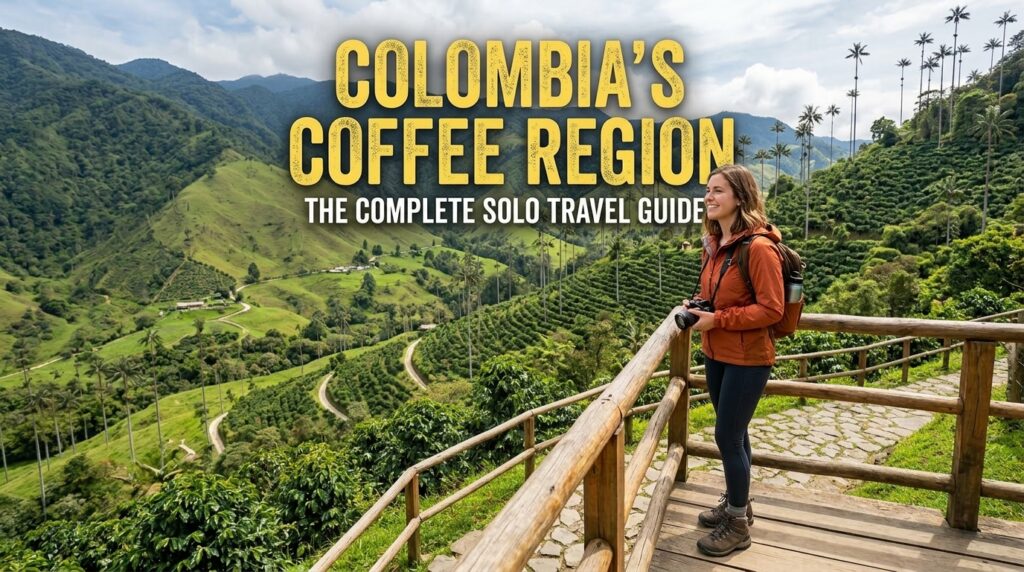
Colombia’s Coffee Region looks like a postcard from the second you get there. Rolling green hills, wax palms taller than anything has a right to be, towns painted in colors that shouldn’t work together but do. It’s also one of the easiest places in Colombia to see wrong, because most people treat it like a day trip bolted onto a Medellín stay instead of a destination on its own.
Give it 2-3 real days. That’s the difference between “I saw some hills and drank a coffee” and actually understanding why this region has people planning entire trips around it.
Salento vs. Filandia
Most solo travelers base themselves in Salento, and for good reason. It’s the gateway to the Cocora Valley, it has the most hostels and restaurants built for travelers, and the main square (with its steep side street of shops, Calle Real) gives you an easy, walkable evening routine after a day of hiking.
Filandia is quieter and less touristy. Same rolling coffee-country views, fewer people, and a well-known mirador (lookout tower) just outside town that gives you a panoramic look at the whole region. If Salento is where you meet people, Filandia is where you get a break from meeting people.
You don’t have to pick one. They’re about 30-40 minutes apart, and a lot of solo travelers base in Salento and day-trip into Filandia for an afternoon. If your time is genuinely limited, though, Salento is the better single choice, it does more of the job on its own.
Downhill Mountain Biking in La Carbonera
Downhill Mountain Biking in La Carbonera
If hiking Cocora isn’t enough adrenaline for you, this is the excursion to ask about once you’re in Salento.
I did this ride myself, and it’s one of the most memorable things I’ve done in the Coffee Region. You start in the back of a Jeep, which takes you up into the mountains for the first leg: around 20 kilometers of downhill riding, winding around the peaks with wax palms that seem to sway as you pass them. Around 10 AM, you stop for breakfast at a local house before loading back into the Jeep for a second climb to another peak. From there it’s another 11 kilometers downhill, finishing right in Salento’s main square.
The bikes are good quality, and every operator running this route provides a helmet and windbreaker along with a guide who rides the whole way with you. It felt genuinely safe from start to finish, a real guided descent through some of the best scenery in the region, not a stunt ride.
The operator I rode with is Biking Tour Carbonera (you may also see it listed as Bike Tour Salento). Message Johan directly on WhatsApp at +57 321 314 3568 to book or ask questions before you commit. There’s also a TripAdvisor listing with reviews if you want a second opinion first.
The Cocora Valley Hike
This is the reason most people come. The wax palms here are the tallest palm trees in the world, and walking through a valley full of them feels like nowhere else in Colombia.
A few things to know before you go:
- Two main routes. The short loop (2-3 hours) gets you into the valley and back with palm views the whole way. The long loop (5-6 hours) adds the Acaime hummingbird sanctuary and a river crossing on wobbly wooden bridges, more effort, more payoff.
- Go early. The valley gates open around 7:30 AM, and starting early means better light, fewer crowds, and clouds that haven’t rolled in yet to block the views.
- Willys jeeps get you there. Shared Jeep taxis leave from Salento’s main square regularly and are the standard way in and out, cheap and part of the experience.
- Altitude and weather change fast. You’re above 2,000 meters and it can go from sunny to genuinely cold and wet within an hour. Bring a layer.
Coffee Farm Tours
Not every coffee tour is worth your time. Some are built for buses of day-trippers and rush you through a scripted 20 minutes. A real tour walks the actual farm, explains the process from bean to cup, and ends with you tasting coffee that was picked within days, not months.
Finca El Ocaso is a working coffee estate near Salento that leads you through actual harvesting and processing, not a stage-set version of it, and gives you the option to stay on-site if you want to wake up in the middle of it. EcoLodge Kasaguadua pairs its farm tour with a genuinely off-grid, sustainability-focused stay if that angle appeals to you more than a standard hostel night.
If you want a tour without committing to a full farm stay, book a Coffee Region tour through GetYourGuide and skip the guesswork of picking blind.
Where to Stay
Salento, Filandia, and the wider Coffee Region hostel picks (including Digital Nomad, Solo Traveler, and Party Hostel breakdowns) are already covered in detail in the Best Hostels in Colombia guide, so check that instead of picking blind here.
Getting There & Getting Around
The nearest airports are Armenia and Pereira, both small and easy compared to Bogotá or Medellín. If you’re coming from Medellín, expect a 5-6 hour bus ride or a short flight into Armenia. From Bogotá, it’s a similar setup: fly into Armenia or Pereira, or bus it if you’ve got the time and want the scenery.
Once you’re in the region, everything runs on those Willys jeeps and short local buses between towns. You won’t need a rental car, and honestly, you wouldn’t want one on these roads anyway.
For the full picture of how the Coffee Region fits into a longer Colombia trip, the Two-Week Colombia Solo Itinerary breaks down getting to and from this region as part of a bigger route.
Food & What to Eat
Coffee is the headline, but it’s not the only thing worth eating here. Trucha (trout) shows up on almost every menu, often served with patacones (fried plantain) on the side, a Coffee Region staple you won’t find pushed this hard anywhere else in Colombia. Look for it grilled with garlic sauce, it’s the local way to order it.
Bandeja paisa, the enormous mixed plate of beans, rice, meat, egg, and plantain, is technically an Antioquia dish but shows up everywhere in this region too, and after a full day hiking Cocora, it’s exactly the meal you’ll want.
Safety & Practical Tips
The Coffee Region is genuinely one of the lower-risk parts of Colombia to travel solo. That’s worth saying plainly instead of padding it out with warnings that don’t really apply here. Salento’s main square and hostel area are well-trafficked and comfortable to walk at night. The usual Colombia basics still apply, don’t flash expensive gear, keep your bag zipped on buses, but you’re not managing the same level of street awareness you would in a big city.
The bigger practical risk here is altitude and weather, not people. Layer up, drink water, and check the forecast before committing to the long Cocora loop.
Why It’s Worth Slowing Down For
It’s easy to treat the Coffee Region as a photo stop between Medellín and somewhere else. But this is one of the few places in Colombia where slowing down is the whole point. Sit on a farm porch with a coffee that was on the tree a week ago, watch the clouds roll over the wax palms, and you’ll understand why people extend their “one day” into three.