
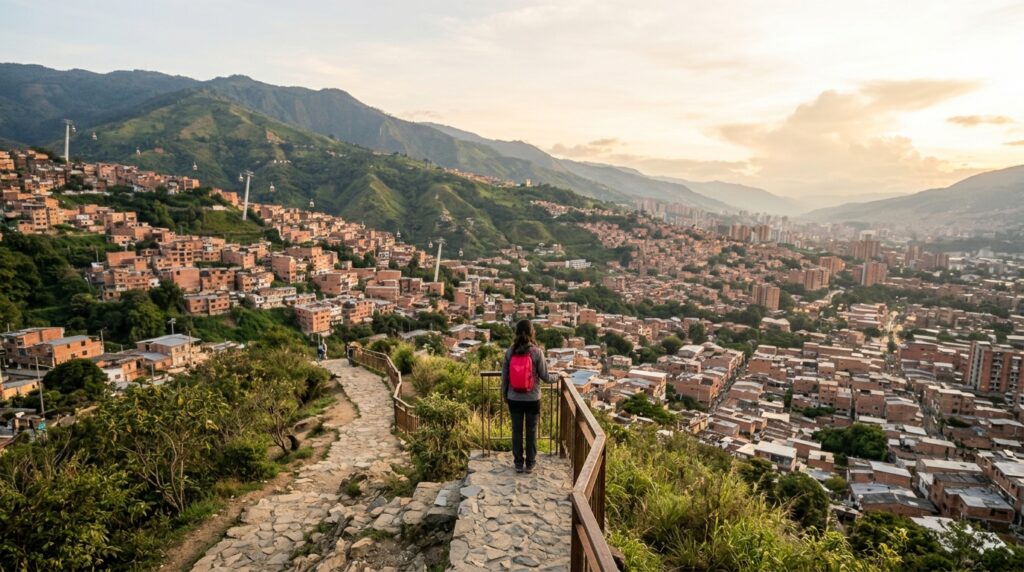
Packing for Colombia is harder than it looks. It’s one country, but a normal two-week trip can take you from 31°C and sticky on the coast to 7°C and drizzling in Bogotá, with Medellín’s spring weather somewhere in between. Pack for one of those and you’ll be wrong for the other two.
The good news: you don’t need a big bag to cover all three. You need the right layers and a short list of things that actually earn their space. Here’s how I’d pack, after seven trips. For the bigger picture on solo travel in Colombia, start there.
What I Actually Travel With
I always travel the same way: a hard-shell carry-on suitcase and a backpack. No checked bag, no extra fees.
The carry-on is for anything delicate. Gifts, valuables, anything I want locked away while I’m in transit, plus whatever clothes don’t fit in the backpack. The hard shell is the point. It protects what’s inside.
The backpack does most of the work. For my last two trips, about three months of travel, I’ve used a tomtoc travel backpack I bought on Amazon, and I can’t say enough about it for the price:
- The laptop compartment has a false bottom. I carry a 16-inch laptop, bigger than most people travel with, and if the bag gets dropped, the laptop doesn’t hit the ground. There’s a second sleeve for a tablet or documents.
- Chargers and the mouse get their own compartment that opens completely flat.
- The main compartment opens lengthwise and it’s deep. I roll everything (socks, underwear, t-shirts, shorts, jeans) to keep it tight, and fit as much as I can in there.
- A small top pouch for gum, change, lip balm and a little notebook, and a full-length front pocket for the things I want without digging: power bank, snacks, printouts.
- Two side bottle pockets. In transit, one holds my umbrella and the other a pair of flip-flops. Once I’ve arrived, it’s a water bottle and the umbrella.
- It’s comfortable: wide padded straps, an adjustable chest strap, a breathable back panel, and extra padding on both carry handles.
- A strap on the back slides over the handle of the carry-on, so when you’re waiting around the airport, it rides on the suitcase instead of your shoulders or the floor.
It’s ballistic nylon with strong zippers, and after three months it still looks brand new.
One honest note: it’s a bit bigger than a standard under-the-seat bag. No airline has ever stopped me to check it, and it fits under the seat, but you do give up some foot space. Personal item sizes vary by airline, especially on budget fares, so check yours before you fly. If you want to avoid paying for a checked bag, a carry-on plus a backpack like this is an excellent combination.
Why Colombia Is Hard to Pack For
It comes down to altitude. The higher you go, the colder it gets, and Colombia’s main stops sit at very different heights.
| Stop | Typical temperatures | What it feels like |
|---|---|---|
| Cartagena and the coast | 24–31°C | Hot and sticky from the minute you land |
| Tayrona and Santa Marta | 24–32°C | Jungle heat, beach days and bugs |
| Medellín | 17–28°C | Warm days, cool evenings, a quick shower most afternoons |
| Coffee Region | 13–22°C | Green for a reason: afternoon rain and muddy trails |
| Bogotá | 7–19°C | About 2,600m up. Sunny one hour, cold rain the next, properly cold nights |
So the trick isn’t packing more. It’s packing in layers, so the same few pieces work on a hot afternoon in Medellín and a cold night in Bogotá.
Build Your List in a Minute
Every trip is different, so I built a free quiz that does the work for you. Tell it your stops, how long you’re going, your travel style and your bag, and it builds a packing list for your exact route: what to bring, how many, and what to leave at home.
The Core List Everyone Needs
Whatever your route, these are on the list.
Clothing
- Breathable tops: about six for a trip of a week or more. Laundry is easy to find, so you don't need more.
- Light long pants or jeans: locals in Medellín and Bogotá wear long pants, and they're your best defence against mosquitoes at night.
- A light layer (long-sleeve or hoodie) for cool evenings and freezing buses and planes.
- Rain cover if you're going anywhere in the mountains, where afternoon rain is a given. I carry a compact umbrella in my backpack's side pocket. If you'd rather keep your hands free, especially for hiking, a packable rain jacket folds into its own pocket.
Footwear
- Comfortable walking shoes. Medellín is hilly and Cartagena's old town is uneven stone. You'll walk more than you planned.
- Sandals or flip-flops for beach days, hot evenings and hostel showers.
Gear
- A small daypack, worn on your front on the Metro and in crowds. That's what locals do. Something like this packable daypack folds down to nothing.
- A reusable water bottle. Tap water in Medellín and Bogotá is treated and fine to drink.
- Packing cubes, one per climate: hot-weather stuff in one, Bogotá layers in the other. These packing cubes are the kind I mean.
Tech
- Phone and charger, plus a power bank. A dead phone at night in a new city is how a fine evening goes wrong.
- An eSIM set up before you fly, so you land with data for maps and a ride.
Toiletries and health
- Sunscreen. The sun is strong everywhere, including at altitude where it doesn't feel hot.
- Basic meds and stomach meds. New food, new bugs. You'll be glad you have them on day three.
- Pocket tissues. Plenty of public bathrooms have no toilet paper.
Documents and money
- Passport, travel insurance, and two bank cards kept in different bags, so one swallowed or cloned card doesn't leave you stuck.
Safety
- A small padlock. Most hostel lockers expect you to bring your own.
- A phone strap for Medellín and Bogotá. Phone snatching is the most common street crime in the big cities, and a strap makes you a harder target.
For deeper gear picks, see my gear essentials for solo travelers in Colombia.
My own lesson: I used to overpack t-shirts and pants. Now I travel with one pair of light pants that roll up tight, joggers in the athleisure style from Uniqlo, in dark blue. They look modern, so they work during the day and at dinner, and I can hike in them too. One pair that does everything. If you need something more formal for a specific event, plan for that, but for everyday Colombia it's all I need.
What to Pack for Each Stop
Medellín
Spring weather all year: warm days, cool evenings and a quick shower most afternoons. Pack light tops, one pair of long pants, a light layer for the evening and a rain jacket. If you're going out in El Poblado, bring one outfit with closed shoes, since plenty of clubs turn away shorts and flip-flops. More on the city in my Medellín guide.
Bogotá
This is the stop that catches people out. At about 2,600m, nights drop to single digits and most places don't have heating. Add a fleece or warm sweater, a long-sleeve base layer if you run cold, a beanie and lip balm with SPF for the dry air. You don't need a winter coat. More in my Bogotá guide.
Cartagena and the Coast
Hot and sticky from the minute you land. Shorts, a swimsuit (two if you hate putting on a wet one), a sun hat, sunglasses, insect repellent and after-sun for the day you underestimate the sun. Dress light and drink more water than you think. More in my Caribbean coast guide.
The Coffee Region
Green for a reason. Plan for afternoon rain and muddy trails around Salento. Pack a rain jacket, a warm layer for cool evenings, insect repellent, and shoes you don't mind getting muddy for Cocora Valley. You can rent rubber boots in Salento, so don't carry a pair from home. More in my Coffee Region guide.
Tayrona and Santa Marta
Jungle heat, beach days and bugs. Start hikes early. Add a dry bag for the boat rides (everything gets splashed), a headlamp for dark campsites, insect repellent and a yellow fever vaccination card, since parks may ask for proof. More in my Santa Marta and Tayrona guide.
What to Pack for Colombia by Month
Colombia doesn't have summer and winter. It has dry and rainy seasons, and they differ between the mountains and the coast.
December to March
Dry season across most of the country, so it's the easiest time to pack. The mountains can still throw the odd shower, so keep the rain jacket.
April and May
Rainy season in the Andes. Medellín, Bogotá and the Coffee Region get heavy afternoon rain. The rain jacket becomes essential, and quick-dry clothes are worth it.
June to August
A drier stretch in the Andes. The coast is in its wet season, mostly short afternoon storms that pass quickly.
September to November
The wettest stretch almost everywhere, October and November especially. Pack for rain wherever you're going, and add a warm base layer for Bogotá.
Carry-On or Checked Bag?
Carry-on only is very doable in Colombia, and it makes the domestic flights easier. Budget airlines charge extra for bigger bags, so a light bag saves money every time you fly. The catch is liquids: anything over 100ml can't go in your carry-on, so bring travel sizes or solid toiletries and buy the rest there. Power banks always go in your carry-on, never in checked luggage.
Two things I've learned packing this small:
- Wear your heaviest things on the plane. Your bulkiest shoes, your heaviest layer. It gets them out of your bag and buys you room.
- Pack for the trip home, not just the trip there. When every bit of space counts, leave a little room for souvenirs and gifts on the way back.
If you're going carry-on, the quiz has a ready-made carry-on packing list you can start from. For how domestic flights and baggage fees work, see Getting Around Colombia.
What to Leave at Home
Half of packing well is knowing what to skip. The top five:
- A heavy winter coat. Bogotá is cold, not Canadian-winter cold. A fleece and a rain jacket handle it.
- A plug adapter. Colombia uses the same plugs and voltage as Canada and the US.
- Full-size toiletries. Pharmacies and supermarkets in the cities sell everything you use at home.
- Expensive jewellery or a flashy watch. Don't give papaya. Anything that looks expensive makes you a target.
- A big stack of US dollars. Use ATMs inside banks and malls and take out pesos as you go.
The full list, with what to pack instead, is in What Not to Bring to Colombia.
Before You Fly
- Check-MIG: Colombia's free online immigration form, done on the official Migración Colombia site between 72 hours and 1 hour before your flight. Skip the lookalike sites that charge for it.
- Passport: valid for your whole trip, and ideally six months beyond, since some airlines check.
- Travel insurance: phone theft and food poisoning are the classic Colombia claims. Save the policy number offline.
- eSIM: set it up at home so you land with data.
Everything else for arrival, including the Canadian entry fee, is in my Colombia entry requirements guide.
FAQ
Do I need a plug adapter for Colombia?
Not if you're coming from Canada or the US. Colombia uses the same plugs and the same voltage. The odd older outlet only takes two-prong plugs, and that's about it.
Can I drink the tap water?
In Medellín and Bogotá, yes, it's treated. On the coast and in small towns, refill from big bottles instead.
What should I wear in Colombia?
In the cities, dress like the locals: jeans or light long pants, not shorts. Shorts and sandals are normal on the coast. Dressing closer to the local norm draws less attention.
What shoes should I bring?
I bring one pair of everyday shoes for walking and a pair of flip-flops. The flip-flops are for being "home", at a hostel or an Airbnb, since I'd rather not walk around barefoot on the floor, and they're essential in showers and anywhere wet: the pool, the beach. For Cocora Valley and Tayrona, bring a pair you don't mind getting muddy. I hiked in hiking shoes, and I've seen people do it in running shoes, barefoot shoes and rubber boots.
Do I need a big backpack?
No. A carry-on and a small daypack cover a two-week trip if you pack in layers and do laundry once or twice.
Pack light, pack in layers, and leave room for the things you'll buy there. If you're still planning the route, my 2 weeks in Colombia itinerary puts these stops in an order that works.