
The Cultural SENSITIVITIES OF SOLO TRAVEL etiquette That Separate Tourists from Travelers IN COLOMBIA:
You’ve mastered the basics and you know why cultural sensitivities of solo travel etiquette can ruin your Colombia trip before it even starts. And you’ve learned the essential everyday etiquette that keeps you from standing out like a clueless gringo. Now you greet with “buenas,” respect hora colombiana, and understand family-centric norms.
But here’s what most travel guides won’t tell you: surface-level etiquette only takes you so far.
Cultural landmines in Colombia aren’t about forgetting to cheek-kiss or showing up on time. They’re deeper, more nuanced, and far more damaging when you get them wrong. And, these are the mistakes that don’t just make you look foolish. They actively harm the communities you’re visiting, endanger your safety, and reveal a level of cultural ignorance that no amount of practiced greetings can mask.
What to Expect
In this final installment of our Colombia cultural pitfalls series, we’re diving into the sensitivities that separate short-term tourists from genuinely respectful travelers. For instance, the topics that make Colombians genuinely angry. Next, the environmental mistakes that destroy ecosystems. Furthermore, the social media habits that endanger local families. Then we cover the dining customs that signal disrespect at the deepest level. And finally, the gentrification blind spots that make you part of the problem rather than part of the solution.
CULTURE SHOCK
These aren’t minor faux pas. They are the cultural shocks that test whether you’re truly committed to traveling with respect and awareness, or whether you’re just another privileged foreigner taking what you want from Colombia without considering the consequences.
Ready to level up your cultural intelligence? Let’s get into it.
Pitfall #6: Taboo Topics Like Politics and Drugs
The Pablo Escobar Problem
You’re sitting at a café in Medellín making small talk with your Colombian Airbnb host. Trying to seem culturally engaged, you say, “So I watched Narcos before coming here. What was it really like during Pablo Escobar’s time?”
The temperature in the conversation drops ten degrees instantly and your host’s smile becomes strained. And now, you’ve just committed one of Colombia’s cardinal conversational sins.
Why This is Deeply Offensive: Bringing up Pablo Escobar with Colombians is equivalent to starting a conversation with a German by asking about Hitler. In addition, many foreigners think of Escobar as a source of national pride or cultural fascination. But it’s the opposite in Colombia. Bringing it up can genuinely irritate and hurt locals who lived through those violent years or lost loved ones to cartel violence.
Traumaic History
During the 1980s-90s, Escobar’s reign of terror killed thousands of Colombians. Police officers. Journalists. Politicians. Innocent civilians. Medellín was dubbed “the murder capital of the world.” For Colombians, this isn’t entertaining Netflix content. It’s traumatic history their country has worked desperately to move beyond.
When tourists arrive wearing Pablo Escobar t-shirts, taking “narco tours,” or casually asking locals about their experiences with drug trafficking, it reduces decades of Colombian suffering to a novelty. Colombia even moved to ban Pablo Escobar and other narco-themed merchandise in 2025 precisely because this narco-tourism was becoming so damaging to the country’s modern identity.
Other Conversation Topics to Avoid
National politics: Colombia’s political landscape involves deep divisions around topics like the peace accords with FARC, government corruption, and social inequalities. Unless locals bring it up, steer clear.
Drug trafficking and cocaine: Don’t ask where to buy drugs. Don’t joke about cocaine. And definitely don’t assume everyone knows about the drug trade. Most Colombians have no connection to this industry and resent the stereotype.
Terrorism and violence: The country has made enormous strides toward peace. But bringing up guerrilla groups, paramilitaries, or violence as a conversation starter is insensitive.
Religion: Colombia is predominantly Catholic. While religious diversity exists, avoid critiquing or mocking religious beliefs.
What to Talk About Instead
Safe, engaging topics Colombians appreciate include:
- Soccer (fútbol): Ask about local teams, Colombia’s national team, or favorite players
- Cycling: Colombia produces world-class cyclists. This is a point of national pride.
- Coffee culture: Colombia’s coffee heritage is something locals love discussing
- Regional food and culture: Ask about local dishes, festivals, and traditions
- Travel recommendations: Colombians love sharing hidden gems in their country
- Music: Salsa, reggaeton, vallenato. Music is central to Colombian identity.
The Safety Connection
Engaging in drug-related conversations or trying to score drugs as a tourist makes you an immediate target for scams and violence. The US Embassy’s warning about dating apps and scopolamine poisonings is directly related to tourists seeking out vice.
If you approach Colombia looking for drugs or Pablo Escobar tourism, you’re painting a target on your back.
Pitfall #7: Environmental Insensitivities in Eco-Hotspots
The Instagram Backdrop Mentality
During your trip you plan a visit to the Amazon region or the Coffee Triangle (Zona Cafetera). You treat it like an Instagram backdrop. Trampling off designated trails for the perfect shot. Touching wildlife for selfies. Purchasing products made from endangered species. Or staying in accommodations that actively harm the ecosystems you came to experience.
Why This Matters in 2025: Colombia is facing extreme environmental pressure. Climate change is profoundly disrupting coffee production, with successive cycles of La Niña and El Niño bringing torrential rains or prolonged droughts. The Colombian Amazon faces critical challenges including deforestation, illegal mining, and loss of biodiversity.
The country is trying to balance economic development with environmental preservation. Tourists who treat these regions carelessly undermine years of conservation work by locals who actually live with the consequences.
Amazon Region: What You Must Know
The Colombian Amazon confronts multiple interconnected challenges. Deforestation for cattle ranching and illegal crops. Illegal gold mining that poisons rivers with mercury. Loss of indigenous territories. Reduced legal income opportunities for locals that push people toward environmentally destructive activities.
What NOT to do:
- Don’t buy products made from endangered species. For example, exotic animal skins, certain woods, etc.
- Don’t feed or touch wildlife. This habituates animals to humans and endangers both them and future travelers.
- Don’t venture off established trails without a local guide. You risk damaging fragile ecosystems and getting dangerously lost.
- Don’t litter or leave waste (including biodegradable waste in inappropriate locations)
- Don’t support “animal encounter” experiences that exploit wildlife (holding sloths, swimming with pink dolphins captured for tourism, etc.)
What TO do:
- Book tours with certified eco-lodges and operators who employ locals and reinvest in conservation
- Hire indigenous guides from local communities. This way our money directly supports sustainable livelihoods.
- Follow Leave No Trace principles religiously
- Ask tour operators about their environmental practices before booking
- Support green businesses that balance economic development with environmental protection
Coffee Region: Respecting Working Agricultural Land
Colombia’s coffee farmers are struggling to balance innovation with tradition as climate change threatens their livelihoods. The country is the world’s third-largest coffee producer. Coffee culture is deeply tied to national identity and rural economies.
What NOT to do:
- Don’t expect cheap coffee everywhere. This is becasue quality Colombian coffee costs money, and farmers deserve fair prices.
- Don’t treat coffee farms purely as tourist attractions. These are working agricultural businesses.
- Don’t criticize traditional farming methods without understanding the complex trade-offs farmers face.
- Don’t purchase coffee from uncertified sources or vendors who can’t explain their supply chain.
What TO do:
- Visit certified coffee farms that practice sustainable agriculture and pay workers fairly
- Learn about the coffee production process with genuine curiosity and respect
- Buy directly from farmers or certified cooperatives when possible
- Support coffee tourism operations run by actual coffee-growing families
- Ask about climate adaptation strategies farmers are using. They’re innovating constantly.
The Budget Traveler Advantage
Supporting sustainable tourism doesn’t always mean spending more. FOr example, staying in community-run eco-lodges often costs less than corporate hotels. It puts money directly into local hands. Eating at local fondas (small restaurants) in coffee towns supports farming families who cook traditional meals. In addition, hiring a local guide from an indigenous community costs a fraction of corporate tour operators. Overall, it provides more authentic experiences.
Practical Tips:
- Research eco-certifications before booking (Rainforest Alliance, Fair Trade, organic certifications)
- Pack reusable water bottles, bags, and utensils to minimize waste in areas with limited infrastructure
- Bring biodegradable soap and toiletries for remote areas
- Take all trash with you, even in cities, but especially in rural or wild areas
- Offset your carbon footprint through Colombian conservation organizations if possible
Pitfall #8: Social Media Over-Sharing and Privacy Norms
When “Authentic Content” Violates Privacy
During a visit you’re staying with a local family through a homestay program. Perhaps you post regular updates of your day-to-day, and end up showing their home interior, their kids playing, the grandmother cooking in the kitchen. And maybe even geo-tag the exact location without asking.
You think you’re sharing authentic cultural experiences. However, you’ve actually just violated their privacy and potentially endangered their safety.
Why Colombian Privacy Norms Are Different
Colombia’s history of violence, kidnapping, and social instability has created a culture where privacy and discretion are deeply valued. This is particularly true around home locations, family details, and personal information.
While younger, urban Colombians may be more comfortable with social media sharing, many families (especially those supplementing income through hosting tourists) maintain strict boundaries around what gets shared publicly.
Additionally, displaying wealth or resources online (nice home, tourist hosting income, valuable possessions) can make families targets for theft or extortion in some areas.
The “Nomad Guilt” Factor
Digital nomads often share “authentic local experiences” for engagement without considering how this impacts the locals featured. That photo of the market vendor. The intimate family dinner. Or, the guide from an indigenous community.
These people didn’t sign up to be content for your brand. Many don’t have social media themselves and can’t control how they’re portrayed or who sees these images.
There’s also the gentrification dimension. When digital nomads constantly post about “hidden gem” neighborhoods, affordable local spots, or secret locations, they drive tourism and investment to those areas. This accelerates the displacement and price increases locals are already experiencing.
Social Media Guidelines for Respectful Travel
What NOT to do:
- Never geo-tag people’s homes or private spaces: This includes homestays, Airbnbs, or restaurants in residential neighborhoods.
- Don’t photograph people without explicit permission: Quick street photography in tourist zones is one thing. But closeups of individuals require consent.
- Never post photos of children without parental permission: This is both a cultural and legal issue.
- Don’t tag people without asking first: They may not want their name associated with tourist content.
- Avoid “poverty porn”: Don’t post images that exploit people’s difficult circumstances for engagement.
- Don’t share specific locations of untouched spots: If locals wanted these places overrun, they’d promote them.
What TO do:
- Always ask before photographing: “¿Puedo tomar una foto?” (May I take a photo?) or “¿Está bien si comparto esto en redes sociales?” (Is it okay if I share this on social media?)
- Get explicit consent for social media sharing: Taking a photo for personal memories is different from posting online.
- Obscure identifying details when sharing: Blur faces if you didn’t get permission. Don’t show house numbers or specific locations.
- Wait to post until you’ve left: Don’t post real-time location data while still in someone’s home or a sensitive location.
- Ask about photo preferences upfront: When checking into homestays or tours, clarify photography policies immediately.
- Credit and compensate fairly: If someone is essentially becoming your content (guides, hosts, local experts), consider whether they should be compensated beyond the base service fee.
- Use generic location tags: Instead of “María’s House, Comuna 13,” use “Medellín, Colombia”
The Respect-First Approach
Think of social media through this lens: Would you want strangers posting photos of your home, your children, and your exact address online without asking? Or how about your affordable neighborhood suddenly flooded with tourists because someone called it “the next cool spot” online?
The answer is almost certainly no. And so, comonn ettiquette would suggest extending that same courtesy to Colombians.
Special Considerations for Sensitive Locations
- Indigenous territories: Many communities have strict photography rules. Always check.
- Sacred sites: Even if photography is allowed, consider whether it’s respectful.
- Markets and vendors: Some vendors welcome photos as free advertising. Others find it intrusive. Ask first.
- Political demonstrations or sensitive events: Photographing these can endanger participants.
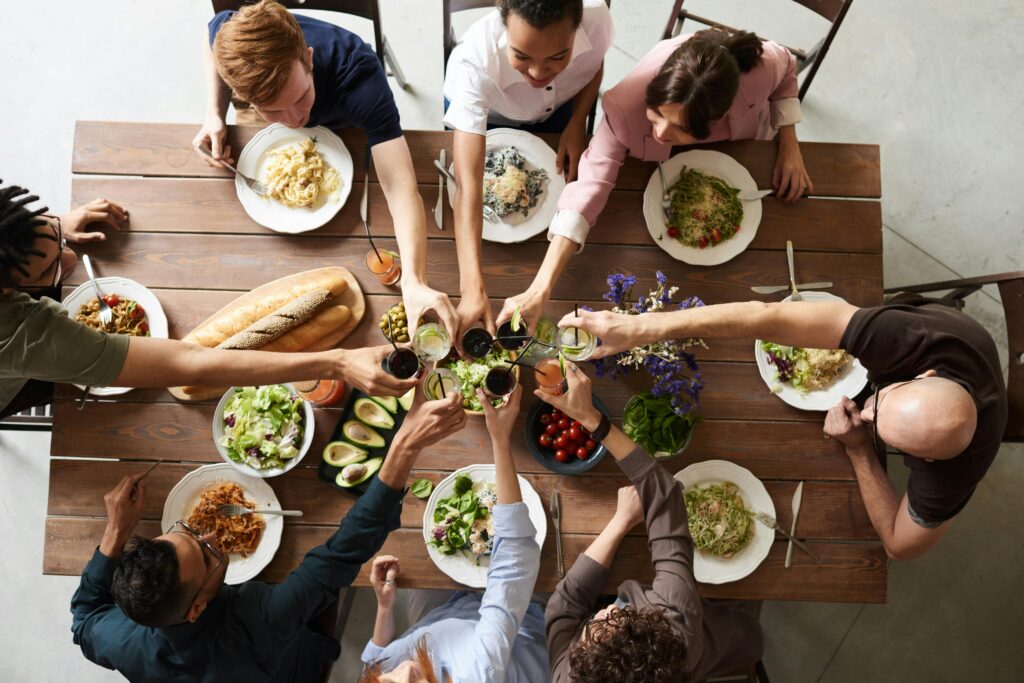
Pitfall #9: Food and Dining Faux Pas
The Family Lunch That Went Wrong
One day you’re invited to a Colombian family’s home for lunch. Multiple dishes arrive such as bandeja paisa, arepas, patacones, and more. Starving, you take individual portions of only what you want. You eat with your hands because “it’s easier.” Perhaps you leave food on your plate because you’re full. Or, you decline the host’s offer for seconds because you’re watching your diet.
Without realizing it, you’ve just committed multiple dining errors that signal disrespect.
Understanding Colombian Dining Culture
Meals in Colombia are communal, social events where food represents hospitality, connection, and care. And, table manners are taken seriously. How you engage with food reflects your respect for your hosts and the culture.
Critical Dining Rules 1-5
1. Everything is Eaten with Utensils
It’s very rare to see someone eating with their hands in Colombia. Even foods North Americans might eat with hands (empanadas, arepas, fruit) are typically eaten with knife and fork. You may notice that Colombians cut fruit into pieces with utensils rather than biting directly. This practice is so ingrained that eating with hands can seem uncivilized or childish.
Exception: In very casual settings (street vendors, certain snacks), hands may be acceptable. When in doubt, use utensils.
2. Try Everything Offered
It is polite to try and taste every dish on offer. Refusing food can seem like rejecting your host’s generosity and effort. Even if something looks unfamiliar or unappealing, take a small portion and taste it.
3. The “Clean Plate” Paradox
This one confuses many foreigners. When you have finished eating, leave a small portion of food on your plate to indicate you are full. This is becasue cleaning your plate completely can signal you’re still hungry. It suggests your host didn’t provide enough food, potentially embarrassing them.
However, sources differ slightly on this. Some say try to finish everything as leaving food can be impolite. The safest approach: leave a tiny amount (a few bites) to show you’re satisfied, but don’t leave substantial food waste.
4. Proper Table Posture
- Keep your hands visible above the table (but don’t rest your elbows on it while eating)
- Sit up straight. Slouching is considered bad form.
- Wait for “Buen provecho” (enjoy your meal) before starting to eat
- Don’t use toothpicks while still seated at the table
5. Sharing is Caring
Colombian meals often involve shared dishes, especially in family settings. Don’t hoard favorite items or take disproportionate amounts. Serve yourself modestly and leave plenty for others. If dining family-style, wait for others to serve themselves before taking seconds.
Critical Dining Rules 6-10
6. Coffee Culture is Sacred
Coffee (tinto) is offered constantly in Colombia. Before meals. After meals. During visits. At work. Refusing coffee repeatedly can seem standoffish. Even if you don’t want caffeine, accepting one cup and sipping it slowly shows respect for the gesture. Coffee is a ceremony of generosity and unity.
7. Alcohol is Social, Not for Getting Drunk
Colombians do not generally drink alcohol with the purpose of getting drunk quickly. They tend to drink at a leisurely pace, enjoying alcohol as a complement to meals, socialization, and conversation. Getting visibly intoxicated at a Colombian dinner is embarrassing and disrespectful.
When offered aguardiente (Colombia’s traditional anise-flavored spirit), accepting is seen as a gesture of friendship and trust. Saying yes builds social bonds.
8. Reciprocate Invitations
To show you’re grateful for being hosted, you’ll likely want to reciprocate the invitation at a later date. This is customary in Colombia. If someone invites you for a meal, plan to return the favor by inviting them out or to your place if appropriate.
9. Offer to Help
If dining at a Colombian home, offering to help either with setting the table or cleaning up after the meal is a kind gesture. It’s usually appreciated. Even if declined (which is likely), the offer shows respect and gratitude.
Restaurant-Specific Etiquette
- Splitting bills is normal when dining with friends. But on romantic dates, men traditionally pay (at least for the first 3-4 dates).
- Waitstaff are summoned by making eye contact, not by snapping or shouting.
- Don’t rush service: Meals are leisurely social experiences. Rushing or seeming impatient is rude.
- The 10% voluntary tip (propina voluntaria) is standard. Even if “included” in the bill, rounding up is appreciated.
Special Foods with Cultural Significance
- Arepas: Staple food representing regional identity. Each region has its own style.
- Bandeja Paisa: Hearty Antioquian dish with rice, beans, meat, plantain, avocado, arepa, and more. Don’t criticize the portion size or carb-heavy nature.
- Ajiaco and Sancocho: Traditional soups that represent home cooking and comfort.
- Exotic fruits: Colombia has incredible biodiversity in fruits. Try unfamiliar ones with curiosity and enthusiasm.
The Bigger Picture
Food in Colombia isn’t just sustenance. It’s identity, community, and love. Approaching Colombian meals with curiosity, respect, and appreciation opens doors to deeper cultural understanding and genuine relationships.
Pitfall #10: Gentrification Blind Spots as a Digital Nomad
The Uncomfortable Truth About Your Impact
You rent a luxury Airbnb in El Poblado for half what you’d pay in your home city. And maybe you work from international coffee chains. Perhaps you only order from Rappi (Colombia’s delivery app) constantly, and only buy groceries at large supermarket chains. And perhaps you only socialize exclusively with other expats at trendy gringo bars.
Maybe you congratulate yourself for “living like a local” while spending $2,000 per month. Meanwhile, the Colombian family who lived in your Airbnb apartment was evicted so the landlord could charge you triple the local rate. The neighborhood tienda where they shopped for decades just closed because it can’t compete with your convenience-driven spending habits.
The uncomfortable truth: You are part of a system causing displacement, even if that was never your intention. Ignoring this reality doesn’t make it go away. It just makes you complicit without awareness.
Understanding Your Impact
We covered gentrification backlash earlier in this series. But here’s where it gets personal. Your daily choices either mitigate or accelerate the problem.
Where Your Money Goes Matters
Every peso you spend is a vote for the kind of Colombia you want to exist. When you consistently choose international chains, corporate Airbnbs, and expat-centric businesses, you’re channeling money out of local communities. It goes into corporate profits or foreign landlords’ pockets.
The rental market distortion is severe. Landlords have discovered they can charge foreigners 2-3x what locals can afford. So they convert long-term local housing into short-term rentals or expat-targeted apartments. Neighborhoods that once housed working-class Colombian families now cater exclusively to foreigners with US or European income levels.
The Colombian rap group Alcolirykoz captured this perfectly in their song “Medellificación”: “They asked Gilmer for his apartment / To raise the rent by a million pesos / Turn it into an Airbnb and rent it to a gringo / And then call it entrepreneurship.”
How to Minimize Your Gentrification Footprint
Housing Choices:
- Stay with local hosts through home-sharing rather than corporate Airbnb properties owned by real estate companies
- Choose co-living spaces that partner with local families (like Nomadico in Laureles) rather than displacing them
- Negotiate long-term rentals directly with local landlords at fair local rates, not inflated “gringo prices”
- Consider less-gentrified neighborhoods: Laureles and Envigado offer better local integration than El Poblado
- Avoid ultra-luxury short-term rentals in residential neighborhoods where families clearly live
Daily Spending Choices:
DO:
- Shop at neighborhood tiendas (small local stores) and markets rather than chains
- Eat at family-run and local restaurants, not just expat-targeted spots
- Hire local independent service providers (cleaners, Spanish tutors, guides) rather than app-based platforms that extract fees
- Buy produce from street vendors and markets (Paloquemao in Bogotá, Plaza Minorista in Medellín)
- Support Colombian brands and artisans
- Use local gyms, coworking spaces run by Colombians, and community centers
DON’T:
- Default to Starbucks, McDonald’s, KFC, or other international chains (yes, they exist in El Poblado and it’s awful)
- Order exclusively from Rappi or delivery apps. Walk to local restaurants instead.
- Shop primarily at chain supermarkets when local options exist
- Patronize expat-only bars and venues that locals can’t afford or feel unwelcome in
- Support businesses that obviously cater only to foreigners and price out locals
The “Support Locals” Spending Test
Before any purchase, ask yourself: “Does this money stay in the Colombian community, or does it extract wealth from the local economy?”
A $4 coffee at a local panadería run by a Colombian family supports that family, their employees, and their suppliers. A $6 latte at Starbucks sends profits to a multinational corporation. Both caffeinate you. But only one builds the community you claim to appreciate.
The Long-Term Mindset
Even if you’re only in Colombia for a few weeks or months, your choices set patterns. When hundreds of digital nomads make the same decisions, neighborhoods transform permanently. You might move on to your next destination. But Colombians live with the consequences.
Speaking Up and Learning
- Listen to locals’ concerns about gentrification without defensiveness
- Support local policies that protect residents (rent control, housing preservation)
- Educate other foreigners who seem oblivious to their impact
- Use your privilege constructively: If you have a platform (blog, social media), highlight Colombian-owned businesses and advocate for responsible tourism
- Pay more when it matters: If a local vendor charges you 20,000 pesos and you know it’s underpriced, pay 25,000. Don’t haggle every single peso from struggling families.
The Expat-Local Bridge
Some digital nomads integrate beautifully into Colombian communities. Learning Spanish fluently. Forming genuine local friendships. Supporting neighborhood businesses. Contributing to local causes beyond just spending money. They become bridges between cultures rather than insulated expat bubbles.
Others remain tourists who simply stay longer. Never learning the language. Never forming real local relationships. Never understanding the economic pressure their presence creates.
Which type will you be?
The Bottom Line
You cannot eliminate your gentrification impact entirely becasue your presence as a foreigner with more economic power inherently creates pressure. But you can be conscious, minimize harm, and actively support the community hosting you.
Colombia is not a cheap playground for foreign remote workers. It’s a country of 51 million people with complex social dynamics, economic challenges, and cultural richness that deserves respect.
Act like it.
Conclusion: Cultural Intelligence Separates Travelers from Tourists
You’ve now completed the full journey through Colombia’s cultural landscape. From understanding why cultural awareness matters to mastering everyday etiquette to navigating these deeper cultural sensitivities, you have the knowledge that 90% of travelers never acquire.
But knowledge without action is worthless.
The Choice Ahead of You
You’re standing at a crossroads. One path leads to being just another privileged foreigner. Taking what you want from Colombia. Contributing to its problems. Remaining oblivious or indifferent to your impact. Moving on to the next destination when things get uncomfortable or expensive.
The other path leads to being a genuinely respectful traveler. Someone who approaches Colombia with humility, curiosity, and awareness. Someone who recognizes their privilege and uses it constructively. Someone who forms authentic relationships, supports local communities, and leaves places better than they found them.
The difference isn’t about being perfect. You’ll make mistakes. Every traveler does. The difference is about intention, awareness, and willingness to learn and adjust.
What Makes This Different
These aren’t the kind of tips you’ll find in mainstream travel guides. Lonely Planet won’t tell you that your Instagram posts might be endangering your host family. Rick Steves won’t explain how your daily coffee choice either supports or undermines local communities. Travel bloggers chasing affiliate commissions won’t call out the gentrification dynamics your presence contributes to.
But you deserve the truth. And more importantly, Colombia deserves travelers who care enough to learn it.
Your Next Steps
1. Review the Full Series If you haven’t already, go back and read Part 1 and Part 2 of this series. Cultural intelligence builds on itself. Each layer of understanding makes the next one clearer.
3. Commit to One Change Don’t try to implement everything at once. Pick ONE behavior from this article that resonated with you. Maybe it’s asking permission before taking photos. Maybe it’s shopping at local tiendas instead of chains. Maybe it’s learning the difference between safe and taboo conversation topics.
Commit to that one change. Master it. Then add another.
4. Share This Knowledge Know other travelers heading to Colombia? Share this series with them. The more foreigners who approach Colombia with genuine respect and awareness, the better the experience becomes for everyone, locals and travelers alike.
Join the Conversation
What’s your biggest takeaway from this series? Drop a comment below and share:
- Which cultural pitfall surprised you most?
- What behavior will you change based on what you learned?
- Have you witnessed gentrification’s impact firsthand in Colombia or elsewhere?
- What other cultural topics should we cover for Colombia or other destinations?
I read and respond to every comment. The kamtravels.net community is built on travelers who genuinely care about getting this stuff right.
[Leave Your Comment Below]
The Final Word
Colombia is ready to welcome you. Not as a consumer or a tourist, but as a respectful guest willing to meet its culture halfway. The country’s beauty, warmth, and richness are extraordinary. But accessing them requires more than just showing up with a backpack and good intentions.
It requires awareness. Humility. Effort. Respect.
You now have all three series of this guide. And, you understand the stakes, the everyday etiquette, and the deeper sensitivities. With these deep dives you know what to avoid and why. And ultimately your curiosity has led you to obtain some practical strategies for navigating complex situations with grace.
The knowledge is yours. What you do with it is up to you.
Travel wisely. Travel respectfully. Travel with cultural intelligence.
Colombia is waiting.
¡Buen viaje y mucha suerte! (Safe travels and good luck!)
— Kam
kamtravels.net
Before you go..
P.S. Already traveled to Colombia and learned these lessons the hard way? I’d love to hear your story. Email me at [your email] with your biggest cultural learning moment. You might be featured in an upcoming article with full credit.
P.P.S. Planning your Colombia trip and want personalized advice? Join our Facebook group “Respectful Travel Colombia” where experienced travelers and long-term expats answer questions, share current safety updates, and help you navigate cultural complexities in real-time.
Related Articles from This Series:
Part 1: Why Cultural Missteps Ruin Your Solo Colombia Trip in 2025 (And How to Spot Them Early)
Part 2: Cultural Pitfalls in Colombia: Your Solo Travel Guide to Blending In (2025)
More Essential Colombia Guides:
- Solo Travel to Medellin, Safety, Neighborhoods & Local Tips
- Traveling to Colombia? Avoid These 10 Costly Mistakes
- Spanish Phrases For Colombia Travel: Speak Confidently
- Colombian Coffee Farm Visit: Cafe Historias and Local Insight
Disclaimer: This article contains honest assessments of cultural dynamics, gentrification impacts, and travel behaviors. Some content may challenge common travel narratives or make readers uncomfortable. That’s intentional. Real cultural intelligence requires honesty, even when it’s inconvenient.