
Published April 2026 | By Kam | KamTravels.net
The Colombia travel advisory 2026 was just updated, and every time this happens, the same thing follows: headlines go out, travel groups light up, and first-time visitors start cancelling plans to Medellín.
I get it. “Level 3: Reconsider Travel” sounds serious. But if you’re reading this because you’re thinking about your first trip to Colombia and you just saw the March 31st update. Take a breath. I’m going to walk you through exactly what changed, what it means, and what it doesn’t mean.
I’ve visited Colombia six times over the past three years, spending one to two months on the ground each visit. I’m not a full-time expat, and I’m not going to tell you Colombia is perfectly safe. What I am going to do is help you read this document the way it’s actually meant to be read.
First: What Is a Level 3 Advisory, Really?
The State Department uses a four-level system:
- Level 1 — Exercise Normal Precautions
- Level 2 — Exercise Increased Caution
- Level 3 — Reconsider Travel
- Level 4 — Do Not Travel
Colombia sits at Level 3, and has for years. Here’s the thing most people miss: Level 3 applies to the entire country as a whole, not to any specific city. It’s a national classification, not a neighbourhood warning.
For context, Mexico is also Level 3. So is Jamaica. So is The Bahamas. Countries that attract millions of North American tourists every year. If you flew to Cancún last spring without a second thought, you visited a Level 3 country.
That doesn’t mean risk doesn’t exist in Colombia, becasue it does. But it means you need to read deeper than the headline.
What Actually Changed on March 31st
The advisory level itself did not change. Colombia has been at Level 3 for years. What changed is that the State Department added a new risk indicator:
🆕 Natural Disaster (N) was added to the existing list of: Crime (C), Terrorism (T), Unrest (U), and Kidnapping (K).
So why natural disaster, and why now?
The advisory specifically calls out:
- Volcanoes — Colombia has active volcanoes that can become active with little warning
- Earthquakes — seismic activity is common across the country; coastal areas may also face tsunami warnings after significant events
- Landslides — this is the most relevant one for travellers. Colombia’s mountainous terrain, combined with informal settlements on hillsides, creates landslide risk. The advisory specifically names Bogotá and Medellín as cities where this applies
This isn’t a dramatic escalation. It’s the State Department formalizing something that’s always been true about Colombia’s geography. If anything, it’s useful information for travellers, Colombia sits on active tectonic zones and rainy seasons can cause landslides in hilly neighbourhoods. That’s worth knowing.
The Zones That Actually Matter: “Do Not Travel” Areas
Buried inside the Level 3 advisory are specific Level 4 “Do Not Travel” zones. These are the areas you genuinely should not visit:
- Arauca department
- Cauca department (excluding Popayán)
- Valle del Cauca department (excluding Cali)
- Norte de Santander department
- Within 10km of the Colombia-Venezuela border
These are remote departments with active armed group conflict, narcotrafficking, IEDs, and landmines. The U.S. government prohibits its own employees from travelling to these regions. This is serious — and it’s also nowhere near where most tourists go.
Medellín, Bogotá, and Cartagena are not on this list. They’re not even close to these zones.
The City-Level Reality: Bogotá, Medellín, and Cartagena
Here’s where the advisory loses nuance, and where lived experience fills the gap.
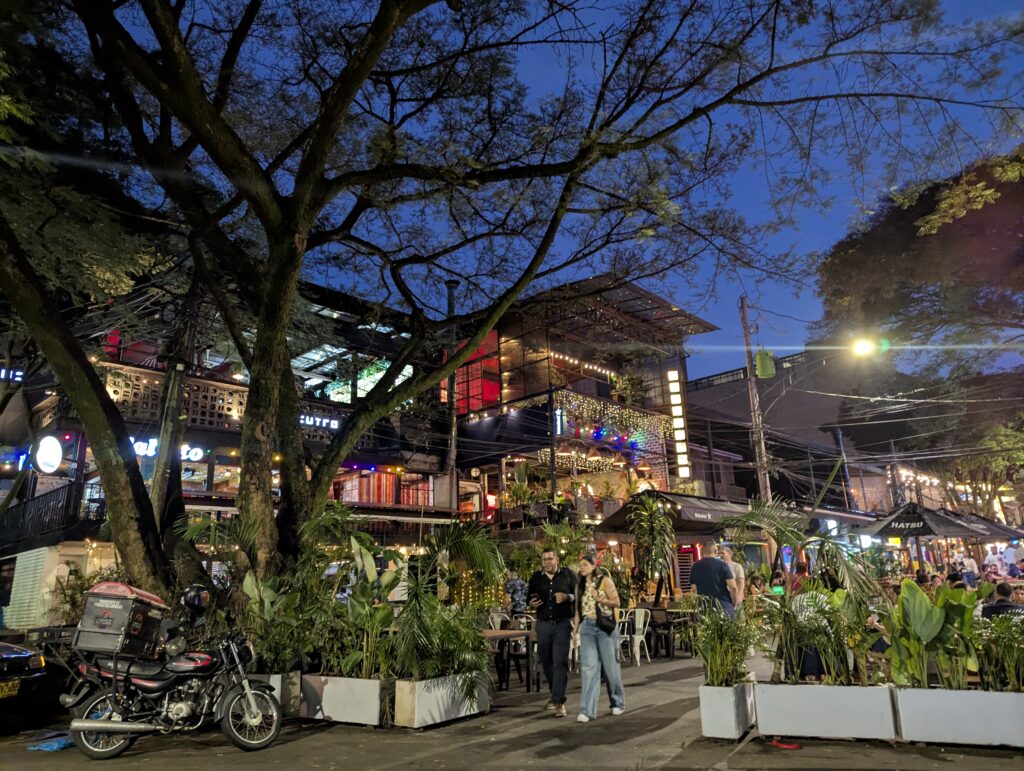
Medellín has been one of the most talked-about travel transformations of the last decade. Named the World’s Most Innovative City in 2013, it’s now a major destination for digital nomads, solo travellers, and food and culture tourism. El Poblado, Laureles, and Envigado are well-developed neighbourhoods with a visible tourist infrastructure. You do need to be street-smart because petty theft and phone snatching happen, and scopolamine (drugging) is a real risk if you’re not careful with drinks. But for the traveller exercising normal urban awareness, Medellín is manageable.
Bogotá is a massive, complex city, and I’d encourage any first-timer to approach it the same way you’d approach any major Latin American capital, with eyes open. Chapinero, La Candelaria (with caution), and the Zona Rosa are navigable. Street crime happens, particularly at night. But the city functions, the food scene is excellent, and most travellers move through it without incident.
Cartagena is Colombia’s most tourist-friendly city by design. The walled city and Getsemaní neighbourhoods are heavily visited, well-lit, and oriented toward international visitors. It’s touristy and sometimes overly so. That being said, it’s also the most accessible entry point for first-timers.
What the Advisory Says vs. What I’ve Observed in Medellín
| The Advisory Says… | What I Observe on the Ground |
|---|---|
| “Violent crime is common in many areas” | True nationally, but Poblado and Laureles feel comparably safe to many Latin American cities I’ve visited |
| “Drugging and extortion occur frequently” | Real risk. Mainly in bars/nightlife if you’re not careful. Common-sense rules apply: don’t accept drinks from strangers, don’t leave drinks unattended |
| “Street crime can quickly become violent” | Petty theft happens. Phone-snatching is the most common tourist incident. Don’t resist and don’t flash expensive gear |
| “Natural disaster risk — landslides in Medellín” | Medellín’s hillside comunas do face this risk during heavy rain. Staying in established tourist neighbourhoods largely removes this concern |
| “Do Not Travel to [specific departments]” | These are genuinely remote conflict zones, not tourist destinations. Most visitors never go near them |
| “Level 3: Reconsider Travel” | Worth reconsidering. WHat this means: research properly, take precautions, and don’t be reckless. Not: don’t go |
My Plain-English Verdict on the Colombia Travel Advisory 2026
The March 31st update isn’t a warning that Colombia got more dangerous. The level didn’t change. What changed is that the State Department added a natural disaster indicator. This change reflects Colombia’s geography, not a new crisis.
The “Do Not Travel” zones are real and should be respected. They’re also not on any reasonable tourist itinerary.
For a first-time visitor planning a trip to Medellín, Cartagena, or Bogotá: the advisory should inform your preparation, not cancel your plans. That means buying travel insurance, keeping your phone out of sight, staying in established neighbourhoods at first, using trusted transport, and not taking unnecessary risks at night.
Colombia rewards the traveller who does their homework. The ones who get in trouble are usually the ones who didn’t.
Want Help Planning Your First Colombia Trip?
I’ve spent months at a time in Colombia over the past three years. If you’re planning your first trip and want real, on-the-ground guidance and not just what the government says, I send practical travel content to a small list of people who actually want to go.
[SIGN UP FOR EMAIL UPDATES — coming soon]
No fluff. No spam. Just honest travel intel from someone who keeps going back.
Sources: U.S. State Department Travel Advisory for Colombia, updated March 31, 2026. Australian Government Smartraveller Colombia advisory. All city-level observations reflect the author’s personal experience across multiple extended visits.