
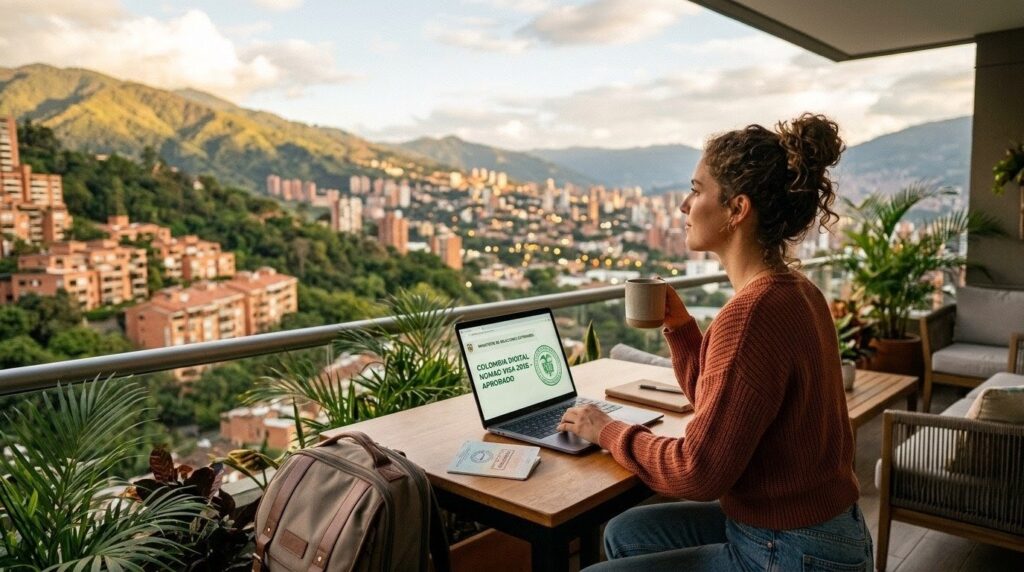
It’s decided! You’re planning to do some solo travel to Medellin. You book two weeks. You stay two months.
I’ve watched it happen to so many people that it stopped being a coincidence and started being a pattern. Somebody lands in Medellín for a quick stop on a wider South America trip, and three weeks later they’re texting their boss about going remote, pricing out month-long Airbnbs in Laureles, and asking me how the visa works.
I get it, because it happened to me too. My first trip was supposed to be a short one. Six trips later, with a wife from this city, I can tell you exactly what pulls people in and keeps them here longer than they planned.
Medellín has a specific hold on solo travelers. Not couples, not families, solo travelers. The kind of person who shows up alone and within a week has a coworking crew, a salsa class, a favorite arepa spot, and three WhatsApp groups buzzing on their phone. The city is built for exactly that person, almost by accident.
This is the honest breakdown of why it works, what the digital nomad visa actually requires in 2026, where to live, how to build a social life from zero, and the downsides nobody likes to mention. No sugar-caoting. This is what I’d tell a friend over a coffee in Provenza.
Medellín is split into very different neighbourhoods, and where you stay shapes the whole trip. Take this quiz now to see whcih neighborhood in Medellin is right for you.
Free quiz · 60 seconds
Not sure where to stay in Medellín?
Answer 8 quick questions and I’ll tell you which neighbourhood fits how you actually travel, with places to stay and a first-week plan.
Find my Medellín neighbourhood →The City of Eternal Spring, and why the nickname earns its keep
Medellín sits in a valley at about 1,500 meters, and that altitude gives it weather that feels almost engineered. Daytime temperatures hover between 70 and 80°F basically every day of the year. No winter coat. No summer that flattens you. You pack one suitcase of light clothes and you’re done for however long you stay.
That sounds like a small thing until you’ve lived it. There’s a real psychological lift to waking up to the same pleasant 72°F morning in what would be February back home. The locals call it “La Ciudad de la Eterna Primavera,” the City of Eternal Spring, and after a few weeks you stop thinking it’s marketing.
The infrastructure backs up the climate. Medellín has the only metro system in Colombia, and Paisas are genuinely proud of it. It’s clean, cheap, safe, and it connects to cable cars that run up the hillsides. Add Uber, Cabify, InDriver, and DiDi all competing for your fare, and getting around is easy and affordable. A cross-city Uber rarely runs more than $5 to $8.
Then there’s cost. Here’s what a comfortable solo month looks like in 2026, staying in a good neighborhood (in USD):
- Accommodation: $700 to $1,400 for a furnished one-bedroom in El Poblado or Laureles
- Food: $400 to $600 if you mix home cooking, set lunches, and the occasional nice dinner
- Transport: $60 to $100 on rideshares and the metro
- Entertainment: $150 to $300 for nights out, gym, classes, weekend trips
Call it $1,400 to $2,400 for a month that feels genuinely good, not a survival budget. You can go leaner in Sabaneta or Belén, or much higher if you want a penthouse with a pool in El Tesoro. But that middle band is where most solo travelers land, and it buys a quality of life that’s hard to match back home for the money.
Safety deserves a straight answer too. The tourist neighborhoods, El Poblado and Laureles, are safe for day-to-day life if you use basic sense. Phone out of sight in crowds, Uber after 9pm, don’t wander dark uphill streets alone at night. The biggest real risk is phone theft, not violence. I cover the deeper safety stuff in my Medellín neighborhood guide, but for now: this is a normal big city with normal big-city rules, not the place the headlines from 30 years ago still imagine.
The Digital Nomad Visa, broken down for 2026
If you want to stay longer than the standard tourist entry allows, the Visa V – Nómadas Digitales is the route most remote workers take. The rules tightened in 2026, so forget anything you read from 2023. Here’s the current picture.
Who it’s actually for. The visa is for people earning income from outside Colombia. Remote employees of foreign companies, freelancers with international clients, and people running online businesses registered abroad. You’ll see a lot of blogs claim it’s “for IT workers and influencers only.” That’s a misread of the original resolution, which singled out IT and digital-content entrepreneurs as welcome, not as the only people allowed. In practice, the visa covers a broad range of remote workers. What’s true is that loosely-defined freelance profiles get more scrutiny now, and clean, professional documentation matters more than it used to.
The income requirement. You need to prove a monthly income of three times the Colombian minimum wage. For 2026 that’s COP 5,252,715 per month, which works out to roughly $1,400 USD depending on the exchange rate. My real-world advice: show at least $1,600 a month. The Cancillería converts your income to pesos at the rate on the day they review your file, not the day you submit, and if a currency swing pushes you under the line, you get denied. Build in a cushion.
One detail that trips people up: no averaging. Each of your last three months has to individually clear the threshold. A huge month followed by a thin month will sink the application even if the average looks fine. And they want personal bank statements, not paystubs, not invoices, not crypto wallets. The money has to land in a personal account in your name.
The other documents. You’ll need a passport with at least six months left, a passport photo, an all-risk health insurance policy that explicitly includes medical repatriation, and a short motivational letter. Two things people miss here. First, regular travel insurance does not qualify anymore. It has to be health insurance with repatriation. SafetyWing’s nomad plan is the one most applicants use because it checks the boxes affordably. Second, US citizens need an FBI background check, and it’s only valid for three months, so don’t pull it too early.
The process. Everything runs through the Cancillería’s online visa portal. You create an account, pick Visa Tipo V and then Nómadas Digitales as the activity, fill in the form, and upload your documents. Government fees come to roughly $220 to $235 total. The official decision window is 30 days, though in practice it can run two to six weeks. Get every document digitized, translated, and apostilled before you open the portal, because a single missing piece is one of the most common reasons applications stall.
After approval. Once you’re in, you have 15 days to register with Migración Colombia and get your Cédula de Extranjería, the foreigner ID card. That cédula is what actually unlocks daily life: bank accounts, gym memberships, apartment leases.
Duration and the catch. The visa can be granted for up to two years and it’s renewable. But time on it does not count toward permanent residency or citizenship. It’s a long-stay visitor visa, full stop. If your goal is to eventually settle permanently, this is a comfortable bridge, not the road itself. You’d need to move to a migrant or other qualifying visa category down the line.
The tax line you can’t ignore. Cross 183 days in Colombia within any 365-day window and you become a Colombian tax resident, which means you’re liable for tax on your worldwide income. Plenty of nomads structure their year around that number on purpose. Know it before you fall in love with the place and accidentally trip the threshold.
Where to actually live as a solo traveler
The neighborhood you pick shapes your whole experience. Here’s the honest version.
El Poblado is where almost everyone starts, and for a first stay it makes sense. It’s the expat bubble: English-friendly, packed with coworking spaces and good restaurants, heavy police presence, and the highest concentration of solid short-term rentals in the city. The Provenza and Manila pockets are walkable and polished.
The cost of that convenience is real, though. El Poblado is the most expensive part of the city, prices have climbed fast, and on some blocks you’ll hear more English than Spanish. If you came to experience Colombia and you stay only in El Poblado, you’ll partly miss it. Great landing pad, easy to outgrow.
Laureles is where I send second-time visitors and most digital nomads who plan to stay a while. Flat grid layout, tree-lined streets, easy to walk, and full of actual Colombians living actual lives. You get roughly 20 to 30% better value than El Poblado for a similar apartment, and the local feel is stronger. La 70 is the main nightlife strip, more salsa and live music than tourist club. The trade-off is you’ll lean on your Spanish more, which honestly is a feature, not a bug.
Envigado is the under-the-radar pick. Technically its own municipality, connected by the metro, quieter and more residential than the others. This is where long-term expats and families drift after El Poblado wears them out. The main park on a weekend evening, full of families and live music with zero tourist energy, is one of my favorite scenes in the whole valley. It’s a slower life with almost no English infrastructure, so it suits longer stays and people who want to actually belong somewhere rather than visit it. My wife and I love this park during Christmas time, and it’s where we go to decompress.
Where to be careful. As a solo traveler, you want to avoid booking right on top of Parque Lleras, where the late-night nightlife crowd brings noise and a real uptick in phone theft and scams after midnight. Centro has incredible history and the Botero plaza, but it’s a daytime-with-awareness zone, not somewhere to base yourself. And the further north and into the hillside comunas you go without a local or a guide, the more your street smarts need to be switched on. Stick to the established neighborhoods for your home base and explore the rest deliberately.
Building a social life from zero
Here’s the part that surprises people. Showing up alone in Medellín is one of the easiest places in the world to stop being alone. The city has a built-in machine for it.
Coworking spaces are the social anchor. Places like Tinkko, WeWork, and the dozens of smaller spots in El Poblado and Laureles aren’t just desks.. They run events, happy hours, and skill-shares specifically because they know half their members are solo travelers looking for a crew. Buy a week pass even if you have a great apartment setup, purely for the people.
Language exchanges are gold. Spanish-English intercambios happen multiple nights a week across the city. You show up, you switch between languages with locals and travelers, and you leave with three new numbers. It’s the single fastest way to meet both Paisas and other foreigners at the same time, and it quietly fixes your Spanish. I suggest checking out the Provenza area in El Poblado for their Gringo Tuesdays language exchange
Hostels work even if you’re not staying in one. Most of the social hostels in El Poblado welcome non-guests to their bar nights, salsa classes, and walking tours. If you’re in an apartment but craving the backpacker social energy, this is your back door into it.
The online communities run deep. Facebook groups like “Medellín Expats” and a stack of WhatsApp groups for nomads, dating, hiking, and pickup sports are active daily. Ask a question about a good dentist or a weekend trip and you’ll have ten answers by lunch. This is also where you’ll find the meetups that never make it onto the tourist sites.
Then there’s everything built around doing things. Salsa and bachata classes that double as the city’s best icebreaker. Exotic Fruit Tours. Pickup football and a growing number of run clubs. Spanish schools that organize weekend trips. Nightlife Tours. Pick any one of these and commit to it for two weeks, and you’ll have a social circle. The pattern that works: don’t try to meet people, go do a thing regularly and let the people come with it!
The honest downsides of medellin solo travel
Medellín isn’t paradise, and pretending it is does you no favors.
Gentrification is real and it has a cost. The wave of nomads and tourists, me included, has pushed up rents in El Poblado and Laureles to levels that price out the locals who built those neighborhoods. Provenza went from a quiet residential pocket to a polished strip in a few short years. You can be a respectful guest, learn Spanish, spend at local businesses, and tip well, but it’s worth holding the awareness that your presence is part of a bigger shift that isn’t all positive for the people who live here.
Gringo pricing exists. As tourism has grown, so has the habit of quoting foreigners a higher price. You’ll meet it in some taxis that won’t run the meter, a few markets, and the occasional landlord. It’s usually small, and it’s beatable with a bit of Spanish and knowing the going rate, but it’s there and it’s mildly annoying.
The altitude is gentler here than in Bogotá, but it’s not nothing. At around 1,500 meters, most people feel fine within a day or two, maybe a touch more winded on the hills at first. If you’re coming from sea level and planning a big hike or a heavy gym week immediately, give yourself a couple of days to adjust.
The visa bar is rising. The 2026 income increase and the tighter documentation standards have narrowed the pool of people who qualify easily. If your income sits right at the line or your freelance setup is hard to document cleanly, you’re looking at more scrutiny and a higher chance of a request for more information or a denial. It’s still very achievable, but it’s not the rubber stamp it was a couple of years ago.
So, should you stay?
Medellín isn’t perfect. The rents are climbing, the visa takes real paperwork, and the city carries the weight of a complicated history that locals live with every day. None of that is a reason to skip it.
What makes it special for solo travelers is the combination you can’t find easily anywhere else: spring weather every single day, a cost of living that buys you a genuinely good life, infrastructure that just works, and a social scene so easy to plug into that loneliness becomes a choice rather than a default. You come for the weather and the price. You stay because three weeks in, you have a life here.
If the two-weeks-becomes-two-months thing is already happening to you, do it properly. Sort the visa, pick the right neighborhood for the trip you actually want, and build the social life on purpose instead of by accident.
Want the shortcut? If you’re still in the planning stage for yor first visit to Medellin, my free 7-Day Medellín Solo Itinerary will save you a week of guesswork.